
Cotton
Cotton Varieties
Cotton varies significantly depending on species, growing conditions and fibre characteristics. These differences influence fibre properties such as length, strength and fineness, and ultimately determine the quality, performance and feel of the finished textile.
Understanding cotton varieties is essential when assessing the difference between standard and premium cottons.
Types of Cotton by Fibre Length
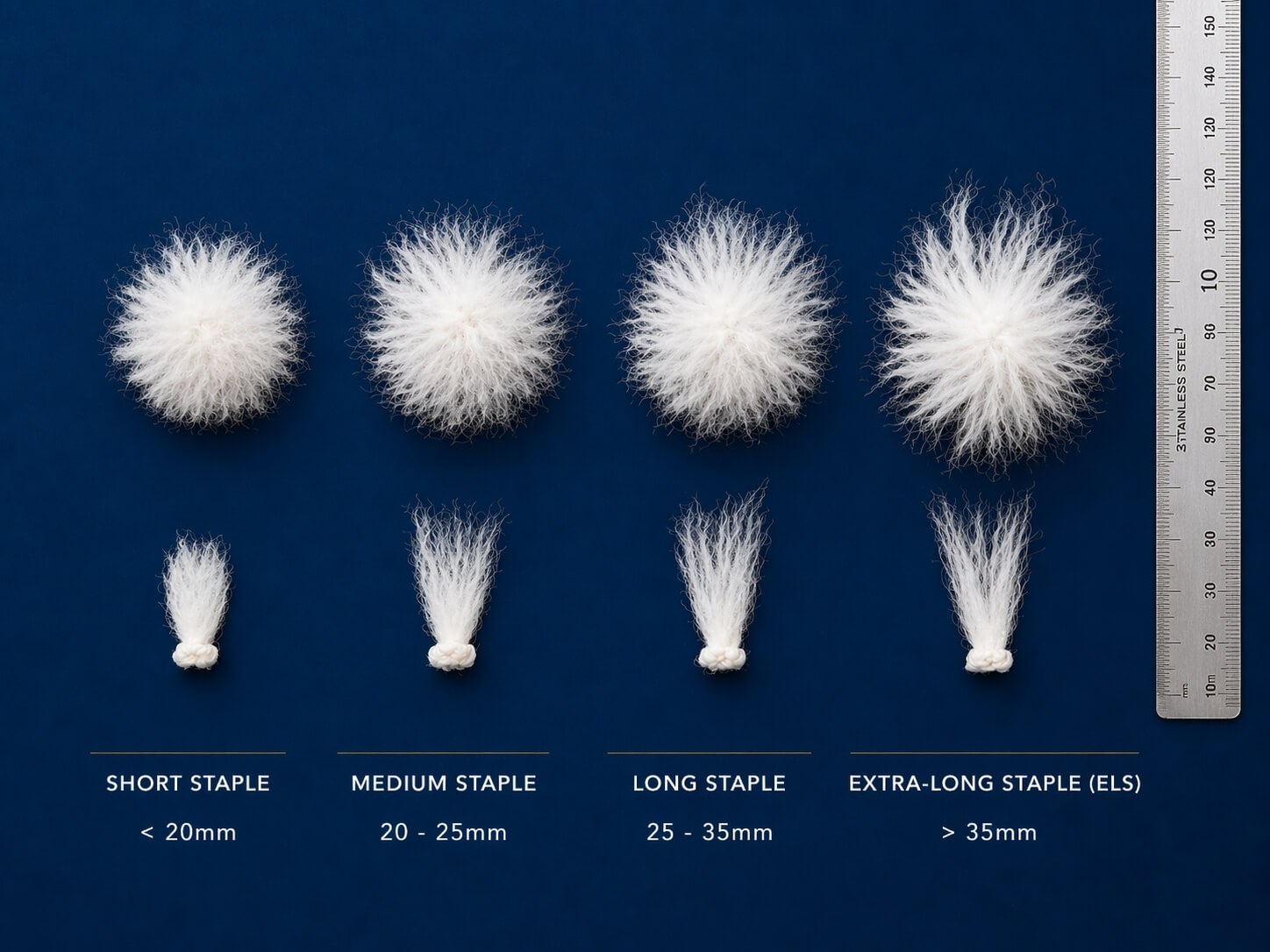
Cotton is commonly classified by staple length, which has a direct impact on yarn quality and fabric performance.
Short Staple Cotton
Short staple fibres are typically less than 20 mm in length. They are widely used in high-volume textile production but can produce coarser, less uniform yarns.
Long Staple Cotton
Longer fibres, generally between 25–35 mm, allow for smoother, stronger and more consistent yarns. These are often used in higher-quality textiles.
Extra-Long Staple (ELS) Cotton
ELS cotton fibres exceed 35 mm in length and represent the highest tier of cotton quality. These fibres produce exceptionally smooth, strong and refined yarns and are typically used in premium and luxury fabrics.
Cotton Species and Fibre Characteristics
Different species of the cotton plant produce fibres with distinct qualities.
- Gossypium hirsutum
The most widely grown species globally, typically producing short to medium staple fibres suitable for a broad range of applications. - Gossypium barbadense
Known for producing longer, finer fibres, this species is associated with high-quality and extra-long staple cottons. - Gossypium arboreum and Gossypium herbaceum
Older species with more limited commercial use today, generally producing shorter and coarser fibres.
While species provides a biological foundation, fibre quality is also influenced by growing conditions and processing.
Recognised Premium Cotton Varieties
Within these species, certain cottons are recognised for their exceptional fibre quality and are widely associated with high-end textiles.
Egyptian Cotton (Giza)
Egyptian cotton—particularly Giza varieties—is derived from Gossypium barbadense and is known for its long, fine fibres. These fibres contribute to softness, strength and durability, although quality can vary depending on origin and grading.
Pima Cotton
Pima cotton is another high-quality form of Gossypium barbadense, valued for its softness and strength. It is widely used in premium textiles where consistency and performance are important.
Supima Cotton
Supima cotton is a trademarked form of American-grown Pima cotton, produced under controlled standards to ensure consistent fibre quality. It represents a small proportion of global cotton production and is associated with high-performance, extra-long staple fibres.
Sea Island Cotton
Sea Island cotton is one of the rarest and most refined cottons, characterised by exceptionally long, silky fibres. It is often regarded as a benchmark for luxury cotton quality.
Why Cotton Varieties Matter
Differences in fibre length, strength and fineness define how cotton performs both in processing and in the finished textile.
Higher-quality varieties typically result in:
- Smoother, more uniform yarns
- Increased strength and durability
- Softer, more refined fabric surfaces
- Greater consistency in appearance and performance
These characteristics are particularly important in applications where quality, longevity and feel are critical.
Understanding Cotton in Context
Cotton varieties represent just one part of the wider picture. Fibre properties, processing methods and end use all contribute to the final performance of a textile.
To explore further:
- Learn more about Cotton Fibre and its core characteristics
- Discover Cotton Processing and how fibre is transformed into yarn
